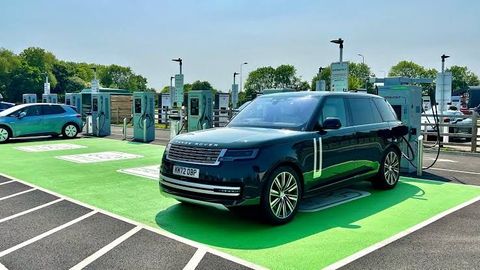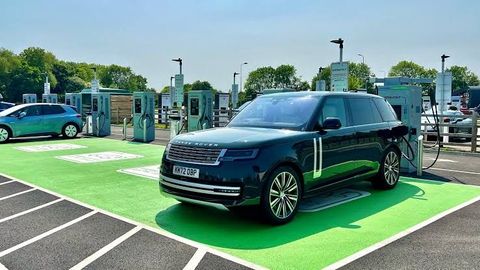
Range Rover Sport Electric Explained: Complete Guide, Performance Insights and Common Questions
The Range Rover Sport is a luxury SUV from Land Rover, a brand associated with premium interiors, off-road capability, and advanced automotive engineering. The idea of an all-electric Range Rover Sport reflects a broader shift in the automotive industry toward battery-powered vehicles that combine performance, comfort, and lower tailpipe emissions
It is important to distinguish the Range Rover Sport from the all-electric Range Rover currently being developed by Jaguar Land Rover (JLR). The company has announced plans for electric vehicles under the Range Rover name, but specifications for a fully electric Range Rover Sport should not be assumed unless officially confirmed.
A battery-electric SUV uses an electric motor powered by a rechargeable battery rather than a conventional petrol or diesel engine. This technology can provide immediate torque, quiet operation, and zero tailpipe emissions during driving.
An electric Range Rover Sport would combine these characteristics with the comfort, capability, and technology expected from a premium SUV. Its actual performance, driving range, charging speed, and equipment would depend on the final production model and market configuration.
Why an Electric Range Rover Sport Matters
The development of luxury electric SUVs reflects several changes in the automotive industry. Manufacturers are working to reduce vehicle emissions while meeting expectations for performance, digital connectivity, passenger comfort, and everyday practicality.
A potential electric Range Rover Sport is relevant to several groups:
Drivers interested in premium electric vehicles.
Families seeking spacious, technology-focused transportation.
Automotive enthusiasts following electric performance.
Drivers who frequently travel in urban areas.
Buyers comparing electric SUVs with petrol, diesel, and hybrid alternatives.
Businesses evaluating vehicle electrification for executive transportation.
Electric powertrains also address some limitations associated with traditional engines. They eliminate tailpipe exhaust emissions, reduce the number of moving parts in the propulsion system, and can provide smooth acceleration.
However, electric SUVs also present practical considerations, including charging access, battery weight, long-distance route planning, and the availability of charging infrastructure. Understanding these factors is essential when evaluating any premium electric vehicle.
Expected Design, Features and Technology
Until official specifications for a fully electric Range Rover Sport are confirmed, potential features should be treated as expectations rather than established facts.
Exterior design and aerodynamics
An electric version would likely need to balance the Range Rover Sport's recognizable design with aerodynamic efficiency. Lower air resistance can help reduce energy consumption, particularly during highway driving.
Potential areas of development include:
Aerodynamic body detailing.
Updated lighting technology.
Distinctive electric-model design elements.
Wheel designs intended to manage airflow.
Underbody treatments that improve aerodynamic performance.
Interior comfort and connectivity
Premium electric SUVs commonly combine digital displays with connected vehicle systems and comfort-focused cabin equipment.
Potential technologies could include:
Digital instrument displays.
Touchscreen infotainment.
Smartphone integration.
Connected navigation.
Voice-controlled functions.
Driver-assistance technology.
Multi-zone climate control.
The final equipment would depend on the production specification and the country in which the vehicle is introduced.
Electric Performance and Driving Experience
Electric motors deliver torque differently from conventional combustion engines. Maximum torque can be available from very low motor speeds, enabling responsive acceleration.
For a performance-oriented electric SUV, engineers must balance acceleration with vehicle weight, battery capacity, thermal management, traction, and energy efficiency.
| Performance Factor | Why It Matters |
|---|---|
| Electric Motor Output | Influences acceleration and power delivery |
| Battery Capacity | Affects available driving energy |
| Vehicle Weight | Influences efficiency, braking, and handling |
| All-Wheel Drive | Can improve traction when properly engineered |
| Thermal Management | Helps control battery and motor temperatures |
| Regenerative Braking | Recovers some energy during deceleration |
An electric SUV designed for demanding terrain would also require careful integration of traction control, torque distribution, suspension systems, and battery protection.
It would be premature to assign a specific power output, acceleration time, or maximum speed to an electric Range Rover Sport without verified model specifications.
Battery Range and Charging Explained
Driving range is one of the most important considerations when evaluating an electric SUV. Range depends on battery capacity, vehicle efficiency, driving speed, temperature, terrain, passenger load, and climate-control use.
Manufacturers typically publish a certified range measured under a standardized testing procedure. Real-world results can differ from these figures.
Charging time depends on the vehicle's battery, charging hardware, temperature, and the power available from the charging point.
| Charging Factor | Practical Effect |
|---|---|
| Battery Capacity | Larger batteries generally require more energy to recharge |
| AC Charging | Commonly used for home and workplace charging |
| DC Fast Charging | Can reduce charging time when the vehicle supports suitable power levels |
| Ambient Temperature | Can affect battery performance and charging speed |
| Battery Preconditioning | May prepare the battery for faster charging under suitable conditions |
| Charging Network | Determines practical access during longer journeys |
For longer trips, drivers should consider charging locations, station reliability, charging duration, and alternative routes. These factors can be as important as the vehicle's official range.
Ownership, Insurance and Maintenance Considerations
Electric SUVs have different ownership requirements from conventional petrol and diesel vehicles. Although they do not require engine oil changes, they still need regular inspections and maintenance.
Important considerations include:
Battery warranty terms and exclusions.
High-voltage system inspection requirements.
Tyre wear and replacement intervals.
Brake system checks.
Software updates.
Roadside assistance arrangements.
Electric vehicle insurance coverage.
Electric SUV insurance may account for the vehicle's value, battery protection, repair complexity, and availability of qualified repair facilities. Policy terms vary, so exclusions, deductibles, and coverage limits should be reviewed carefully.
A vehicle financing calculator can help estimate monthly repayments using the principal amount, interest rate, and repayment period. These estimates do not include every ownership expense, such as insurance, charging, maintenance, registration, or taxes.